
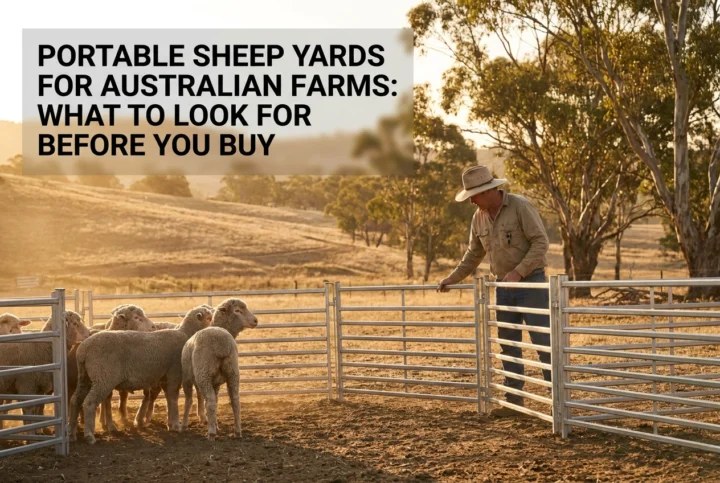
Choosing the wrong portable sheep yards does not just mean a substandard piece of equipment sitting in your paddock. It means lost hours during a drenching run, stressed animals pushing back against poorly designed panels, and the frustration of sourcing replacement latches mid-shearing when your supplier is three weeks out of stock. The stakes are higher than most buyers realise when they first start comparing prices online.
This guide cuts through the noise for Australian farmers who are serious about making the right call on portable sheep yards. Whether you are managing a 50-head operation or running 500-plus across multiple paddocks, the evaluation criteria remain the same: steel specification, modular scalability, and the reliability of every latch and connector in the system.
In the sections that follow, you will find a breakdown of what the steel numbers on a spec sheet actually mean, how to match yard configuration to your mob size, where major suppliers stand when measured against these criteria, and a practical checklist to work through before you request a single quote. Read this before you buy.
The Real Cost of Getting It Wrong
Portable sheep yards can look similar on paper and vary enormously in the field. The difference between a well-specified system and a cheap alternative rarely shows up at purchase; it shows up mid-shearing, when a panel fails under mob pressure or a latch won’t hold and the whole run grinds to a stop.
A yard that collapses or misaligns under load costs far more in delays, animal stress, and handling safety incidents than the price difference ever justified. Poor latch design can add significant time to every setup, which eliminates the core time advantage portable yards are supposed to deliver.
Replacement parts compound the problem. Importers can quote multi-week lead times, and a broken latch pin or hinge plate in week one of shearing is not a theoretical risk.
Buying to your current mob size rather than your next three years forces an early full repurchase, because panel systems are rarely backward-compatible across design revisions.
The market also lacks published RRP data. Without a clear evaluation framework, most buyers default to price alone and choose poorly. This guide gives you that framework.
Why Portable Yards Have Become a Farm Staple
So what’s actually driving adoption? The answer is less about product innovation and more about farm economics.
Mustering a mob from a back paddock to the homestead yards burns diesel, takes hours, and costs sheep condition, particularly in summer heat or after a dry stretch. On multi-paddock properties running several thousand hectares, that round trip is a genuine productivity drain repeated dozens of times a season.
A portable system eliminates that calculation. You tow the yards to the mob, set up a functional handling facility on the spot, and complete drenching, health checks, shearing preparation, or emergency containment without moving sheep further than necessary. The Series-X transportable sheep yards are built around this principle: the yard travels with you rather than requiring stock to travel to it.
The labour dimension matters just as much. Rural workforce numbers have declined and the median age of agricultural workers has climbed, which means waiting for a second person before you can set up handling equipment is often not realistic. Single-person setup in 15 to 20 minutes reflects how Australian farms actually operate now.
The market spans a wide range of operations. A hobby farmer managing a 20-head flock has different spec requirements than a commercial producer running 300-plus head, but both benefit from the same core logic.
Portable yards also don’t replace permanent infrastructure. The homestead yards remain the central processing point; portable systems handle outlying paddocks that would otherwise require long musters. Because quality McDougall Series-X transportable yards are modular by design, the configuration that suits today’s mob can be extended as the enterprise grows, without retiring the original investment.
The Three Non-Negotiables When Evaluating Any Portable Yard
Once you know why portable yards belong on your property, the harder question is which system to actually buy. Three criteria separate a yard that earns its keep from one that becomes a liability.
Steel specification is the single most consequential decision you will make. Well-specified galvanised steel resists corrosion and holds dimensional tolerances that keep panels interlocking cleanly, the detail is in the Steel Specification section below.
Modularity matched to your mob size is the second criterion, and it requires looking three years ahead, not just at today’s headcount. Panel configuration options typically span 17 to 60 panels; buy to your three-year mob size, not today’s headcount, more detail in the Modularity section below. The McDougall Series-X transportable sheep yards approach this with configurations designed to scale with the enterprise rather than force an early full replacement.
Latch and connector design is where portable yards most commonly fail in the field. A sliding pin latch that holds under pressure from a packed race is a fundamentally different piece of engineering from a hook-over design that rattles loose under sheep movement. Inspect the latch mechanism before purchase and ask specifically how it performs under lateral load from a mob pushing hard against the panels. If the latch requires two hands to engage, any 15-minute setup claim dissolves in the paddock.
Steel Specification: What the Numbers Actually Mean
When suppliers say “galvanised steel,” they are not all describing the same thing. Hot-dip galvanising (HDG) produces a zinc coating of at least 85 micrometres on structural steel, per AS/NZS 4680:2006. Electro-galvanising applies a fraction of that thickness. In Australian conditions, mud, UV, and coastal moisture accelerate corrosion on any under-specified coating, and the gap between the two processes becomes visible within a couple of wet seasons. Ask for HDG as a minimum.
Hi-tensile steel carries more load at less weight than standard mild steel. For race panels absorbing lateral pressure from a packed mob, that advantage translates into panels that hold their shape longer without adding transport weight.
Painted or powder-coated mild steel is not automatically inferior, provided the coating is applied over properly prepared steel. The limitation is maintenance: it chips under repeated loading and unloading, and chipped sections rust quickly without touch-up.
Tube wall thickness is a specification many suppliers do not volunteer. Thicker-walled tube resists bending under animal pressure and handles repeated transport better than thin-walled alternatives. Ask directly, and get the number in writing.
For portable cattle yards or sheep yards, dimensional consistency between panels matters as much as the steel itself. Australian-made systems using locally sourced steel hold tighter tolerances, so replacement panels fit without modification. That compatibility is what makes bringing worn or damaged components back to full service a practical option rather than a full repurchase.
Modularity and Mob-Size Scalability
Steel spec gets you into the paddock. Modularity determines whether the system still suits your operation in three years.
A well-designed modular system lets you buy for your current mob and add panels later without discarding what you already own. That future-proofing only holds, though, if new panels are latch-compatible with your existing configuration. Manufacturers occasionally revise connector designs between production runs, so confirm explicitly that panels purchased later will integrate with panels purchased now.
Panel count options from established farm equipment suppliers typically span compact 17 to 22-panel setups through to 60-panel tandem configurations, with transport weight and price scaling accordingly. A 17-panel system suits operations managing around 300 head; a 60-panel tandem setup serves significantly larger commercial mobs.
Headcount capacity alone is not the right measure. Race length and draft configuration matter equally. A three-way draft exit allows simultaneous sorting into separate groups, which is essential for pregnancy scanning, age drafting, and treatment separation in a single run. A 3-metre blinded race, where sheep cannot see through the sides, reduces hesitation and keeps the mob moving without extra labour.
The McDougall Series-X transportable sheep yards are built around this modular logic, allowing configuration choices that match mob size without over-specifying at the outset.
What Else Deserves Scrutiny Before You Sign Off
Beyond panel count and latch design, several practical variables get little attention in supplier brochures but matter considerably once the system is on your property.
Trailer configuration is the first. A single-axle trailer suits smaller properties with well-maintained access tracks; a tandem-axle handles heavier panel loads across rough, soft, or boggy ground without the risk of becoming a recovery job. Confirm which configuration ships with the base system and whether upgrading is an option.
Levelling requirements deserve equal attention. Systems that need no pneumatics or jacks to sit level on uneven ground remove a genuine failure point. In a market where simplicity is still a differentiator, that matters more than most brochures acknowledge.
Replacement parts availability is the most poorly documented variable across agricultural technology equipment suppliers in Australia. Ask directly: how long does a replacement latch pin, hinge plate, or panel section take to arrive during peak shearing season in spring? A multi-week lead time from an importer is not hypothetical; it happens.
Warranty terms vary considerably. A structural warranty is only meaningful if the manufacturer still holds compatible stock. Confirm both manufacturer continuity and component availability before treating warranty language as genuine protection.
Setup time claims of 15 to 20 minutes appear across virtually every supplier, so treat that figure as a baseline, not a point of difference. Ask whether the time includes hitching, positioning, and latching every panel under real paddock conditions.
For farms near state borders or in regional areas, confirm whether the supplier ships directly and what the realistic freight timeline looks like before committing.
How Major Suppliers Compare Against These Criteria
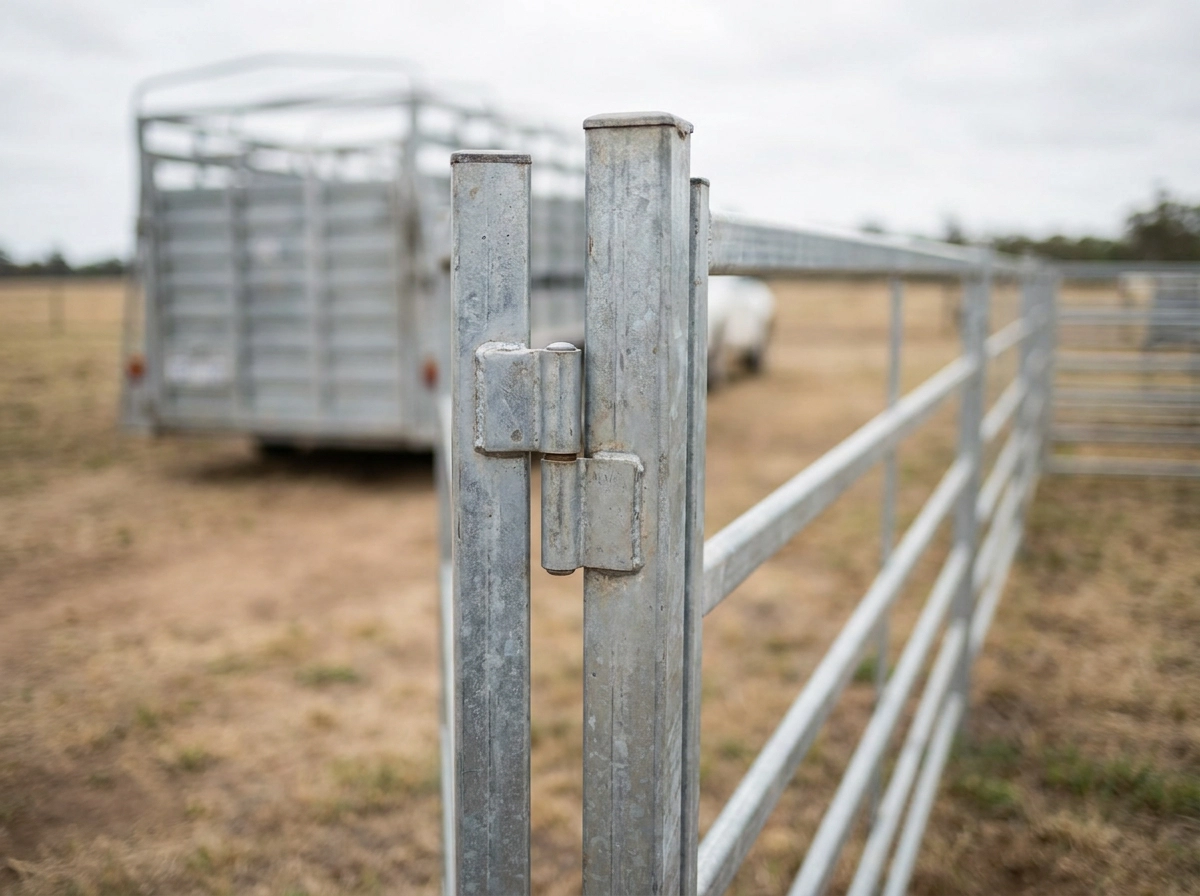
Applying those scrutiny points to actual suppliers quickly reveals how unevenly documented this market is.
McDougall’s Series-X transportable sheep yards benchmark well across all four evaluation criteria. High-grade galvanised steel, a built-in trailer with proprietary leaf-spring suspension, single-person setup, and Australian manufacturing that keeps replacement parts on domestic soil rather than on a container ship. The Dowerin Inventor Award in 1974 reflects five decades of paddock-tested refinement, not a recent marketing claim.
Beyond that, the comparison gets harder to make on published data alone. Several suppliers in the agricultural machinery Australia market list panel counts and capacity figures online but omit steel gauge, galvanising standard, latch specifications, and warranty terms entirely. That information gap is not incidental; it means phone or in-person evaluation is unavoidable before any purchase decision is finalised.
A structured comparison table is the most useful tool for cutting through this opacity. Benchmark each supplier you shortlist against five columns: setup time, panel range, steel specification, trailer type, and warranty. No manufacturer publishes RRP data, so price will require a direct quote regardless. The table keeps that conversation anchored to technical merit rather than letting price become the default selection criterion.
Common Mistakes Farmers Make When Buying Portable Yards
Even with a clear comparison framework in hand, buyers regularly make the same avoidable errors.
Buying for today’s mob, not the one you’ll be running in three years. Adding panels to a modular system later typically costs more than buying the correct configuration upfront, confirm per-panel pricing for future expansion before you commit.
Dismissing latch design as a minor spec. Inspect latch performance under load before you commit, a failure during drafting is an animal welfare incident, not just an inconvenience.
Ignoring parts lead times. Parts lead times from importers can stretch well into the shearing season, confirm domestic stock availability before purchase.
Treating all “Australian steel” claims as equal. Raw steel sourced and processed domestically is materially different from panels assembled in Australia using imported tube. The distinction affects dimensional consistency, weld quality, and whether replacement parts fit without modification.
Overlooking ground conditions. A system designed for flat, compacted ground performs poorly on rocky rises, sandy country, or waterlogged paddocks. Confirm that the trailer configuration and panel footings suit your actual terrain before purchase.
Before You Request a Quote: A Practical Checklist
Before signing off on any purchase, run through these questions with every supplier you’re seriously considering.
- Steel specification: Ask for the tube wall gauge and confirm hot-dip galvanising to AS/NZS 4680 as a minimum.
- Expansion compatibility: Confirm that panels added in two or three years will accept the same latches and connectors as the ones you’re buying now. A design revision between production runs can leave you with mismatched components and no clean fix.
- Latch performance under load: If you can’t inspect in person, ask for a demonstration video showing the latch holding under lateral pressure from a packed race. A latch that works smoothly at rest is not the same as one that holds when 40 sheep are pushing against it.
- Parts lead times: Ask for a concrete timeline for common replacement components during peak shearing season.
- Trailer configuration: Match the trailer spec to your property’s actual access tracks and typical load, not idealised conditions. A tandem-axle configuration handles rough or soft ground better than a single-axle under heavy panel loads.
McDougall Weldments’ Series-X portable sheep yards are worth including on your shortlist. Contact the team to discuss panel configurations suited to your mob size and property layout, and check the McDougall Weldments blog for further guidance on getting the most from your portable yard investment.
Conclusion
Choosing the right portable sheep yard comes down to a handful of decisions that will either pay dividends or cost you for years. Prioritise verified steel specifications over vague marketing claims, confirm true modularity before committing to a system, and stress-test every latch, hinge, and connector before signing off. Factor in parts availability and trailer suitability for your specific country, not just average conditions.
Done right, a quality portable yard reduces labour, improves animal welfare, and gives your operation genuine flexibility across seasons and paddocks.
Frequently Asked Questions
What is the main difference between hot-dip galvanising (HDG) and electro-galvanising for portable sheep yards?
Hot-dip galvanising (HDG) applies a zinc coating of at least 85 micrometres to structural steel per AS/NZS 4680:2006, while electro-galvanising applies only a fraction of that thickness. In Australian conditions with mud, UV exposure, and coastal moisture, HDG provides significantly better corrosion resistance. The difference becomes visible within a couple of wet seasons, making HDG the minimum standard you should request for portable yards.
How long should it realistically take to set up a portable sheep yard in the paddock?
Most suppliers claim 15 to 20 minutes for setup, but this should be treated as a baseline, not a point of difference. Before purchasing, ask whether the claimed time includes hitching, positioning, and latching every panel under real paddock conditions. Single-person setup in 15 to 20 minutes is realistic for well-designed systems like the McDougall Series-X, but this should be verified against actual field conditions on your property.
Why is latch and connector design such a critical factor when choosing a portable yard system?
Portable yards most commonly fail in the field due to poor latch design. A sliding pin latch that holds under pressure from a packed race is fundamentally different from a hook-over design that rattles loose under sheep movement. If a latch requires two hands to engage, any 15-minute setup claim becomes impractical in the paddock. Latch failure during drafting becomes an animal welfare incident, not just an inconvenience, making this one of the most critical evaluation points.
Should I buy a portable yard system based on my current mob size or my expected size in a few years?
You should buy to your three-year mob size, not your current headcount. Adding panels to a modular system later typically costs more per panel than buying the correct configuration upfront. Panel systems are rarely backward-compatible across design revisions, so purchasing too small forces an early full repurchase. Before committing, confirm per-panel pricing for future expansion and ensure new panels will be latch-compatible with your existing configuration.
What should I ask suppliers about replacement parts availability before making a purchase decision?
Ask directly how long common replacement components like latch pins, hinge plates, or panel sections take to arrive during peak shearing season. Multi-week lead times from importers are common and represent a genuine risk if equipment fails during critical handling periods. Also confirm whether replacement parts are held in domestic stock or sourced from overseas, and verify that the manufacturer will remain in business with compatible stock available long-term, as warranty is only meaningful if parts can actually be obtained.